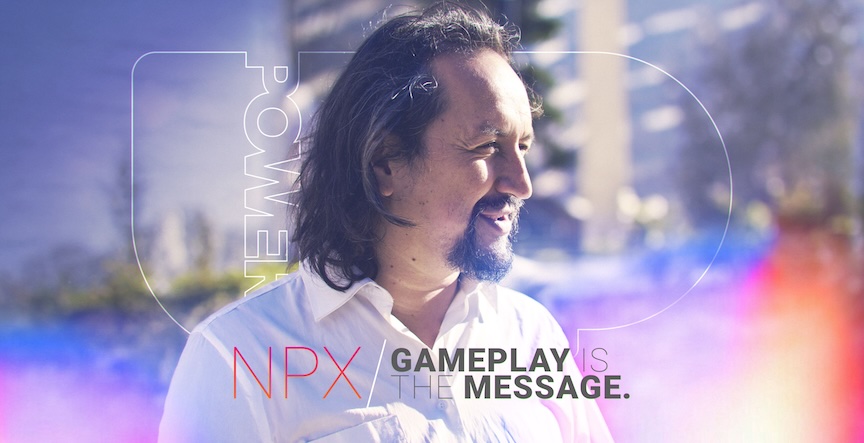
In UGC platforms like Fortnite and Roblox, your brand isn’t judged by what it says, but by how it feels when played. And many brand marketers are still relying on static in-game placements that players ignore, or worse, associate with a poor experience.
PowerUP by Meta4 seeks to do the opposite. To understand what separates forgettable integrations from truly engaging ones, we spoke with Vander Caballero, Founder and CEO of Meta4 Interactive.
Q: We’re hearing a lot about “Native Playable Experiences” (NPX). Why is this the definitive move for brands right now?
Vander Caballero: For the first time in the history of gaming, we can actually deploy gameplay mechanics inside living maps, moving beyond the era where you’d just slap a static logo on a wall. This shift is driven by the advanced cloud architecture of UGC platforms like Fortnite and Roblox, which allows us to translate a brand’s core values into interactive experiences with unprecedented speed. While traditional PC or console integrations once required six months to a year of development and were permanently baked into the game’s code, today’s infrastructure enables brands to launch custom activations in a matter of weeks and rotate them out the very next day.
Current generations – Gen Z and Gen Alpha – speak gaming as their primary language. They spend hours in these worlds. If you want to connect with them, you have to speak that language. You have to connect with them through the mechanics of what they already love.
Q: You often say that bad gameplay is bad for a brand’s reputation. Why is that connection so direct?
Vander Caballero: Think of game mechanics like food or fine wine. Gamers are sophisticated; they are game mechanic connoisseurs. They know instantly if a game feels good or if it’s off.
For example, imagine serving a bad wine with your logo on the bottle. For the person drinking the wine, that’s worse than serving no wine at all! If the gameplay is subpar, it tastes like vinegar to the player. And they will associate that ‘sour taste’ with your brand forever.
If you promise an amazing experience and deliver vinegar, you haven’t just wasted your budget; you’ve actively poisoned your brand equity.
Q: How does the platform, say Fortnite vs. Roblox, change the way a brand should approach integration?
Vander Caballero: You can’t use a one-size-fits-all approach. Fortnite allows for high-fidelity, faithful graphics so we can make things look incredibly realistic and a brand’s integrity can be preserved. In Roblox for example, the look is often blockier and whatever you do needs to also run on mobile, so you have to figure out a different way to present the brand, while keeping it authentic. The way a brand appears on each of the platforms is different, so the experience has to be delivered through different creative hooks. A brand has to be careful to respect what people actually enjoy on each specific platform, while still maintaining its integrity.
Q: How do you ensure a brand’s values aren’t lost when they become a game mechanic?
Vander Caballero: It requires a serious creative brief. Take FX’s Alien Earth as an example. Adding a billboard that says “Alien Earth Coming Soon to FX ” doesn’t create a brand moment. The brand value of FX’s Alien Earth is survival, tension and terror. To represent the brand properly, you have to let the player go inside the spaceship and feel the hunt, which is what we did in our PowerUP experience.
Gamers live lives in these video games that feel as real to them as their physical lives. You have to respect that reality.
Q: What is your advice to a CMO who is nervous about “handing over” their brand to a gaming world?
Vander Caballero: You have to treat your brand like your baby. If you’re taking your baby to a daycare, you don’t just drop them off at the first place you see. You ask: Are these professionals? Do they have a track record? Will my baby be happy here?
The same applies to UGC worlds. You need “daycare” professionals – in this case, game design experts – who will care for your brand.
You can spend millions of dollars on the external marketing of an in-game integration, but if the gameplay inside is broken, you’ve lost the connection. You simply cannot market your way out of a poorly designed mechanic that hurts your brand.
The Bottom Line
The players of 2026 are the most sophisticated audience in history. They can smell a media buy from a mile away. To win, brands must move beyond presence and toward seamlessly integrated game mechanics that resonate at an emotional and visceral level with the players they seek to engage.
The Key Takeaways
Is your brand integration living up to its promise? Reach out to our PowerUP team to bridge the gap between brand image and gameplay reality.
About Vander
Vander Caballero is the CEO and Founder of Meta4 Interactive and its brand-focused division, PowerUP. A pioneer in the Canadian games industry, Vander previously served as a Design Director at Electronic Arts (EA), where he oversaw titles from iconic franchises including FIFA, Need for Speed, and The Sims. He is perhaps best known as the creator of the critically acclaimed, award-winning game Papo & Yo, a deeply personal, autobiographical project that revolutionized emotional storytelling in the medium. Through Meta4, his collaborations with Epic helped shape Fortnite into the UGC world it is today, and further collaborations with Disney again push forward what is possible in Fortnite. Today, he is at the forefront of the Native Playable Experiences (NPX) movement, leveraging his decades of design expertise to help global brands translate their values into authentic, high-fidelity gameplay within platforms like Fortnite and Roblox.
